 Off The Grid Play
Sandbox Games and the Return of Open-Ended Digital Play
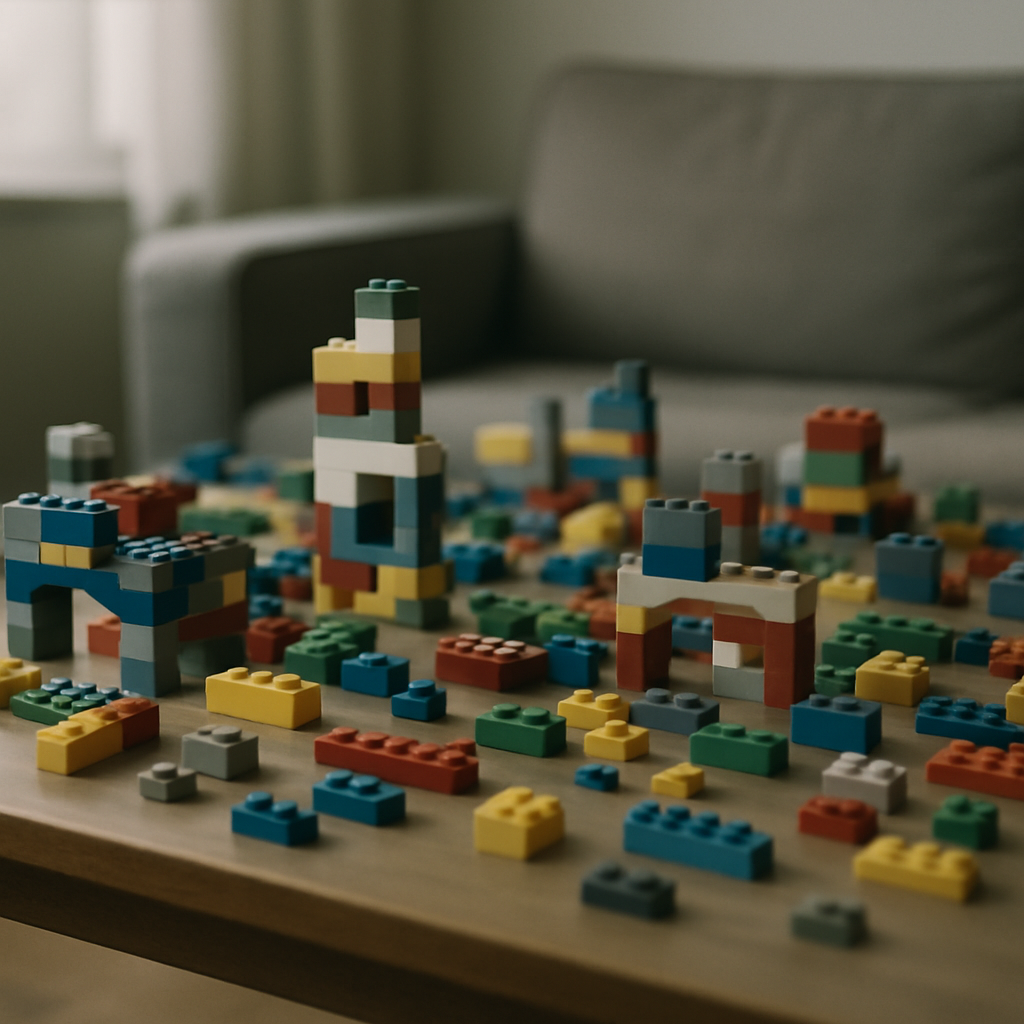
Ask a child what they did in Minecraft yesterday and you might hear about a castle, a farm, an elaborate trap for their sibling, or a railway that took three weeks to build and serves no purpose whatsoever. Ask what they won, and you'll get a confused look. Sandbox games — digital worlds with tools, materials, and no mandatory objectives — have quietly become some of the most-played experiences on the planet, and they represent something genuinely important: the return of open-ended play to screens that were supposed to have killed it.
What Makes a Sandbox a Sandbox
The name comes from the literal sandbox: a bounded space, simple materials, infinite possibilities. Digital sandboxes follow the same recipe. Minecraft hands you blocks. Roblox hands you a game-creation toolkit. Garry's Mod hands you the physics engine itself and shrugs. The common thread is that the game provides a possibility space rather than a path.
This distinguishes sandbox play from most video games, which are fundamentally authored experiences — designers decide what you'll do, in what order, and what counts as success. Sandboxes invert the relationship. The player becomes the designer, and the game becomes raw material. It's the difference between reading a novel and being handed a typewriter.
The Surprising Sophistication of "Just Messing Around"
To adults watching from the outside, sandbox play can look aimless. Look closer and you'll find some of the most cognitively rich activity in all of gaming.
Builders in Minecraft routinely teach themselves proportion, symmetry, and structural logic — architectural thinking absorbed through play. Redstone, the game's circuitry system, has led countless players into genuine computer science; functioning calculators and even simple processors have been built inside the game. Roblox creators learn scripting, game balance, and even the basics of running a small business, since popular creations can earn real money.
But the deeper skill being exercised is more fundamental: goal-setting itself. In a world with no objectives, deciding what to do is the game. Players learn to generate ambitions, break them into steps, persist through tedious middles, and evaluate their own results — the entire architecture of self-directed work, practiced voluntarily, for fun.
Why Open-Endedness Feels So Good
There's a psychological explanation for the sandbox boom. Self-determination theory, one of the most robust frameworks in motivation research, holds that humans thrive on three feelings: autonomy, competence, and relatedness. Sandbox games are practically engineered to deliver all three.
Autonomy is the headline feature — nobody tells you what to build. Competence arrives through visible progress: yesterday a dirt hut, today a cathedral. And relatedness flourishes on shared servers, where friends collaborate on projects the way earlier generations built treehouses together.
Contrast this with heavily structured games full of daily quests, timed events, and progression tracks. Those systems can be compelling, but they direct motivation from the outside. Sandbox play grows it from the inside — which is why players often stay attached to these worlds for a decade or more, long after any scripted game would have been exhausted.
Not Just for Kids
While children dominate the demographics, adults have quietly built their own sandbox cultures. Entire communities recreate real cities block by block. Survival players impose personal challenges and narrate them like memoirs. Some of the most-watched gaming content online consists simply of skilled adults building beautiful things slowly — a digital cousin of woodworking videos.
For grown-ups, sandbox play often serves as a form of restoration. There's a meditative quality to low-stakes building: clear materials, visible progress, no deadline, no client. Several therapists have noted that open-ended games can function as accessible mindfulness practice for people who find sitting meditation impossible. The hands stay busy while the mind unclenches.
Protecting the Empty Space
If there's a caution in the sandbox story, it's that emptiness is fragile. The industry has learned that structure sells — battle passes, login rewards, seasonal objectives — and even sandbox titles feel pressure to add prescribed content. Every added objective is helpful for the player who doesn't know what to do, and a small theft from the player who was about to figure it out.
The same tension exists off-screen. Parents and educators who see the value of open-ended play still find it hard to resist optimizing it, adding goals and lessons and outcomes. The sandbox's lesson is that the absence of instruction isn't a gap to be filled. It's the whole point.
Building Without Blueprints
The success of sandbox games tells us something reassuring: given tools and freedom, millions of people of all ages choose to create rather than merely consume. The empty world isn't a design flaw — it's an invitation. And judging by the castles, cities, circuits, and gloriously pointless railways that players keep building, it's an invitation we still know exactly how to accept.